

Collaboration
Conference rooms
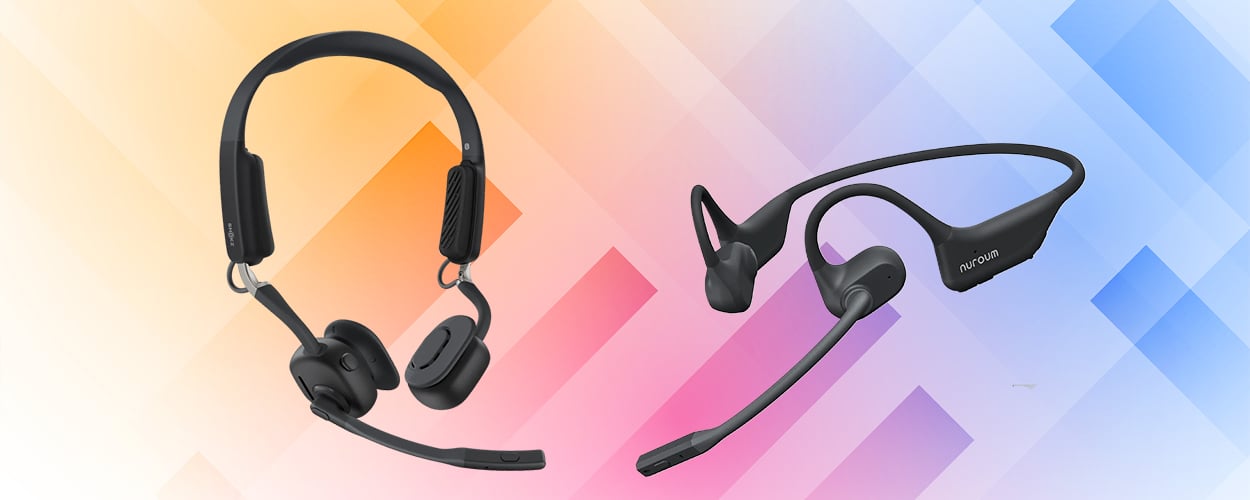

In recent years, a quiet revolution has been taking place in workplace audio technology. Bone conduction headsets—once primarily associated with athletes and outdoor enthusiasts—are now making significant inroads into enterprise environments. Companies like Shokz, Nurom, and others are positioning these "open ear" devices as the future of workplace communication. But are they truly the right choice for your team, or is this just another tech trend that will fade away?
Let's explore what makes bone conduction technology unique, examine its real-world benefits and limitations, and help you determine whether these headsets deserve a place in your office.

Before diving into workplace applications, it's important to understand how bone conduction actually works. Unlike traditional headphones that transmit sound through the air into your ear canal, bone conduction headsets send vibrations directly through your cheekbones to your inner ear, bypassing your eardrums entirely.
This technology isn't new—it's been used in hearing aids for decades—but recent advances have made it viable for everyday communication and entertainment. The key innovation is that your ears remain completely open to ambient sound while you're listening to audio or taking calls.

The shift toward bone conduction in the workplace isn't happening in a vacuum. As consumer "open ear" headphones have gained popularity for fitness, commuting, and personal use, a fascinating trend has emerged: employees who've experienced the benefits of open ear technology in their personal lives are now asking for it at work.
We've seen this pattern repeatedly with our customers. Teams that have discovered the comfort and awareness benefits of consumer bone conduction headphones are increasingly requesting the same technology—but in an office-ready format. The most common ask? "We love the open ear design, but we need a boom mic for professional calls."
This consumer-to-enterprise migration is driving innovation in the space, with manufacturers now developing bone conduction headsets specifically designed for business communication, complete with noise-canceling boom microphones,enterprise-grade connectivity, and professional audio quality optimized for video conferencing platforms.
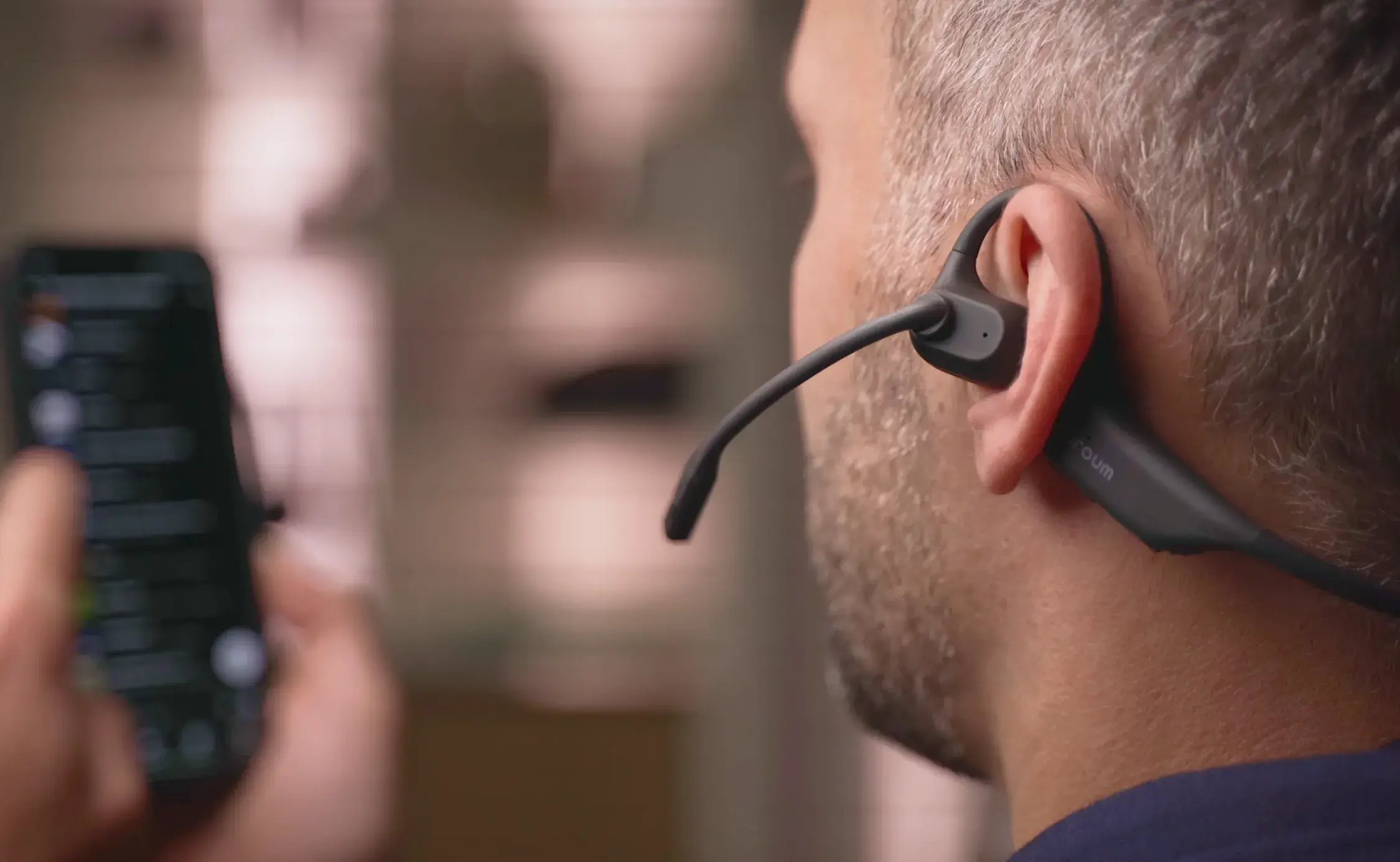
Several factors are driving the adoption of bone conduction headsets in professional settings:
The most compelling advantage is the ability to maintain awareness of your surroundings. Employees can take calls or listen to audio while still hearing:
This makes them particularly valuable in environments where isolation isn't desirable or safe.

Because nothing enters the ear canal, bone conduction headsets offer distinct hygiene advantages:
For employees with certain types of hearing loss or ear conditions, bone conduction can be transformative.The technology can work even when the ear canal is blocked or damaged, making it an inclusive option for diverse teams.

Bone conduction headsets aren't one-size-fits-all, but they shine in specific workplace scenarios.
Despite their advantages, bone conduction headsets have notable limitations that may make them unsuitable for certain teams:
Let's be honest: bone conduction doesn't match traditional headphones for pure audio fidelity. The technology has improved dramatically, but you'll notice:
For voice calls and podcasts, the quality is generally excellent. For music appreciation or audio production work, traditional headphones remain superior.

Because your ears remain open, bone conduction headsets struggle in extremely loud environments. If your workplace includes:
...you may find it difficult to hear your audio clearly, and you'll need to increase volume to potentially uncomfortable levels.
Open ear design means sound can leak. While modern bone conduction headsets have improved significantly, people very close to the wearer may hear faint audio. This makes them less ideal for:
To determine if bone conduction headsets are right for your organization, consider these key questions:

If you answered"yes" to most of these questions, bone conduction headsets warrant serious consideration. If you answered "no" to most, traditional headsets may better serve your needs.
Enterprise-grade bone conduction headsets typically range from $80 to $200 per unit. While this is comparable to quality traditional headsets, consider the potential return on investment:
If you decide to move forward with bone conduction headsets, consider these strategies for successful deployment:
2. Provide proper training
3. Establish clear use case guidelines
4. Monitor and iterate
 The bone conduction market is evolving rapidly. Emerging trends include:
As the technology matures,many current limitations will likely diminish, making bone conduction an increasingly compelling option for more workplace scenarios.

Bone conduction headsets represent a genuine innovation in workplace audio technology, not just a passing trend. They offer unique advantages—particularly around situational awareness, comfort, and accessibility—that make them ideal for specific use cases and environments.
However, they're not a universal solution. The key is understanding your team's specific needs, work environment, and primary use cases. For organizations where awareness and collaboration are priorities, and where audio fidelity can take a slight back seat to functionality, bone conduction headsets can be transformative.
The question isn't whether bone conduction technology is "good" or "bad"—it's whether it aligns with your team's unique requirements. By carefully assessing your needs against the technology's strengths and limitations, you can make an informed decision that enhances both productivity and employee satisfaction.